Karnataka Saṅgīta · 65 Years of Distinguished Service
Carnatic Classical Vocalist · Vaggeyakara · Musicologist · Educationist · Institution Builder · Philanthropist
Profile
Peer characterisation of her musical synthesis — the phrase the tradition reserves for its most complete artists
Prof. Dr. G. N. Nagamani Srinath is one of India's foremost Carnatic classical vocalists — a multifaceted personality who has held centre stage in Karnataka Saṅgīta for over sixty-five unbroken years as performer, teacher, educationalist, vaggeyakara, musicologist, organiser, administrator, director, and philanthropist.
"Nagamani's music was intoxicating both for its melody and colourful content. Brika and bhava seldom go together, but Nagamani proved that she could make an expressive blend of them — a strikingly sweet voice with inherent emotional appeal, brika movement of extraordinary precision, and a command of laya that gave top class stature to her vidwat."
— The Hindu (NMN)She is an astute grammarian with deep insight into the facets of the enthralling medium of music. Her unique combination of orthodoxy and uninhibited creativity, her didactic knowledge and astute subtle rendering, her impeccable mastery over both lakṣya (practice) and lakṣaṇa (theory), and her ability to communicate rasa have carved out a niche for her in the Carnatic world that no other artist of her generation occupies.
She brings to every concert a mellifluous voice with exacting shruti, a revealing manodharma rooted in orthodoxy, extraordinary birka felicity paired with the silken gamakas of the Carnatic asaivu tradition, and a musical articulation of magnetic appeal and emotional richness that, as critics have written across four decades, strikes a chord with both the elite and the common man.
The Journey
A story of hardship, determination, and sixty-five years of devotion to a tradition
Born the only daughter among five siblings to G. N. Narayana — a government primary school teacher whose own childhood walk to Thanjavur in search of music lessons had returned empty-handed — in a village of two unpaved streets with no cultural institution within reach. Her father and mother, Venkatalakshmamma, made their daughter's musical education the project of their lives. In the social climate of 1950s rural Karnataka, sending a girl child alone to the city required a courage that the conventions of the time did not encourage. They sent her anyway.
Sharing a room barely large enough to lie down in, cooking ash-gourd sambhar three times daily on a kerosene stove, washing knee-length hair with two tumblers of warm water. Her first music teacher dismissed her publicly as a village girl with no grasp of music. She was seven years old. She walked home alone in the dark, sat under an Arali tree outside a Navagraha temple, and wept until a temple priest found her. Upstairs was a teacher who might listen. That teacher — Guru Arakere Narayanaraya — heard a few phrases, declared her a gem, and began training her that same day.
The family scraped together two hundred and fifty rupees a month to sustain her — her four brothers cutting their own expenses to contribute. She boarded the train from Mysore station with an iron trunk containing music books, three sarees, a bedsheet, her tambura, and jars of pickle packed by her mother. She arrived at Madras Central with no contacts and no accommodation arranged, carried the trunk on foot from the platform, and found her way by asking strangers. She was up before dawn the following morning, practising alone facing the Adyar Beach, with only her tambura and the sound of the sea.
At the Tamil Nadu Government Music College, she came under the direct Gurukula guidance of Vidwan Ramnad Krishnan — one of the most authoritative Carnatic vocalists of the twentieth century. She also received instruction from M. L. Vasanta Kumari, K. V. Narayana Swamy, T. M. Tyagarajan, D. K. Jayaraman, T. Brinda and Mukta, Gowri Kuppa Swamy, V. Ramaratnam, and R. Vishweshwaran. The synthesis of these lineages produced the artist that the tradition describes as the Combination of Great Masters.
The trunk she carried from Mysore station to Madras Central in 1970 remains in her home. It is the most accurate single image of what this career is: a life in which every resource available was placed, without reserve, at the service of a tradition that needed someone to carry it forward. She did. She continues to.
Musical Legacy
A contribution measured not in career years but in centuries
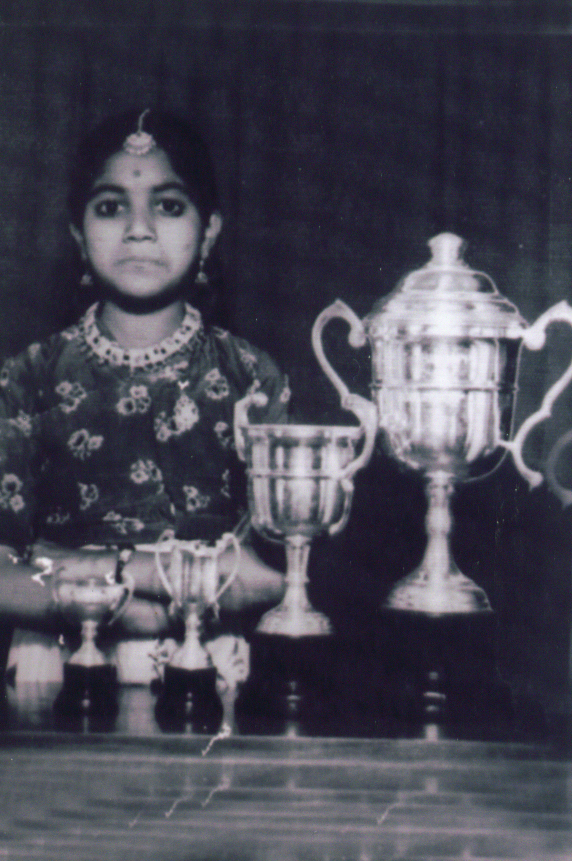
First public concert at age nine; inter-state competition winner. Unbroken performance at the Madras Music Academy, Karnataka Dasara, Radio Sangeet Sammelan, SAARC Cultural Festival, ICCR-sponsored US tours, SPIC MACAY Series, and a direct relay broadcast from Tiruvayyar. Jugalbandhi broadcasts on Doordarshan under the Bharat Integration banner. Performances in the USA, UK, Canada, Australia, Singapore, UAE, Hong Kong, and Malaysia.
Varnas, Tillanas, and Kritis in Kannada, Telugu, Tamil, and Sanskrit — both the swaras (music) and the sahitya (poetry). Performed by leading Carnatic musicians and choreographed by eminent classical dance artists nationally. Sanathana Saarathi: the only Carnatic production to draw compositions on Lord Krishna from fourteen Indian languages — a pan-Indian cultural statement without precedent in the tradition's modern history.
Musical arrangements for Haridasa kirtanas, Vachanas, Bavageetas, and Bhajans — recovering the devotional works of the great saint-poets of Karnataka and returning them to performable form for contemporary musicians. Haridasa Deepti: 101 Haridasa Dasarapadas, including 11 from the lady-Haridasas of Karnataka whose works had received insufficient attention in the performing repertoire.
D.Litt (Tumkur University, 2014). Doctoral thesis documenting 150 composers of the Tyagaraja shishya parampare — recovering musicians invisible to history. Monographs on Shama Shastry, Veena Kuppayyar, Thiruvatiyur Tyagayyar. 13-episode Doordarshan national series on Mysore Composers. Memoir Antaraalada Alaapane (2024; English: The Inner Voice) — a primary historical document of the Carnatic tradition.
Large-scale thematic productions each featuring 50+ performers from music, dance, and drama: Kavi Kavya Deepti (ten centuries of Kannada literature); Bhakti Kampana (Vachana Sahitya); Sahyadri to Chamundiya Varage (complete works of Kuvempu); Karnataka Vaibhava; Sri Purandara/Thyagaraja Vaibhava. Principal acting roles in musical dramas Raja Harischandra, Kunti-Karna, Akka Mahadevi, and Kisagautami.
Professor and Head of the Department of Music, Maharani's Arts & Commerce Government College (Mysore University and Bengaluru University), 1976–2006. Chairperson and Member, Board of Studies and Examiners at the Universities of Bangalore, Mysore, Kerala, and Delhi. Executive Committee Member, Central Sangeet Natak Akademi, New Delhi. Jury Member, AIR Central Auditions Board.
Devotional compositions on Lord Krishna from 14 Indian languages — the only production of its kind in Carnatic music's modern history
A magnum opus spanning ten centuries of Kannada literary heritage, from earliest poets to the modern era
Based on the Vachana Sahitya of Basavanna, Akkamahadevi, and the 12th-century Lingayat saint-poets
Complete works of Kuvempu — Karnataka's revered national poet and Jnanpith laureate
101 Haridasa Dasarapadas including 11 works from the lady-Haridasas of Karnataka
The heritage of different arts and artists of Karnataka — a panoramic cultural document on stage
13-episode Doordarshan national network series reviving the musical legacy of Mysore court composers
Combined compositional legacies of the father of Carnatic music and its greatest saint-composer
Institution
Bengaluru · Founded 1983 · Four Decades of Continuous Service
Sunaada Cultural Centre was founded by Dr. Nagamani Srinath in 1983 with a single purpose: to preserve and propagate the living tradition of Carnatic classical music through the Gurukula residential model, in which students learn in sustained proximity to the teacher as the tradition demands.
Now in its fifth decade of continuous operation, it has grown into one of Karnataka's most recognised institutions for classical music. Students stay with the teacher as they collectively embark on a journey in pursuit of knowledge — the ancient model of musical transmission given permanent institutional form.
Music festivals, conferences, and cultural programmes open to students and the public
Intensive workshops for students at all levels; seminars for music teachers across Karnataka
Lecture demonstrations by leading artists from across India, bringing the full tradition before students
In-house studio where students participate in recording, editing, and mastering as part of training
Workshops across Bangalore, Mangalore, Puttur, Shimoga, Chitradurga, Mysore, and Hassan
500+ hours of free instruction on YouTube, reaching students across five continents
Digital Pioneer
Well before the pandemic made this common — a deliberate act of cultural generosity, years in the making
Dr. Nagamani Srinath was among the first senior Carnatic classical musicians of her generation to establish a structured, free digital Gurukula at unprecedented scale and depth. Her YouTube channel provides sequential, purpose-built instruction from the most basic foundational exercises through the most advanced forms of manodharma sangeetha — available to anyone in the world, at no cost.
The content covers the official Karnataka Government music examination curriculum at Junior, Senior, and Vidwath levels. A girl growing up today in Jodi Gubbi — the village where Dr. Nagamani herself was born in 1950, where there was no music teacher and no cultural institution — can now learn from her, from the first exercise to the deepest reaches of raga elaboration, without leaving home and without paying a rupee.
500+ hours of structured sequential instruction. Covers Karnataka State Government music examination curriculum at all three levels (Junior, Senior, Vidwath). Enrolled students from five continents.
youtube.com/c/ProfDrNagamaniSrinathsonlinegurukulaGurukula (Carnatic Music Lessons) — 59 tracks, 9 hours 48 minutes. Released 2012. Available internationally for streaming and download.
Amazon · Spotify · KalakendraComplete artist portal with biography, awards, recordings, teaching resources, and online booking. Wikipedia entry independently maintained.
www.drnagamanisrinath.comRecognition
From 1971 to 2024 — fifty-three years of formal acknowledgement by governments, institutions, and peers
| Year | Award | Conferred By |
|---|---|---|
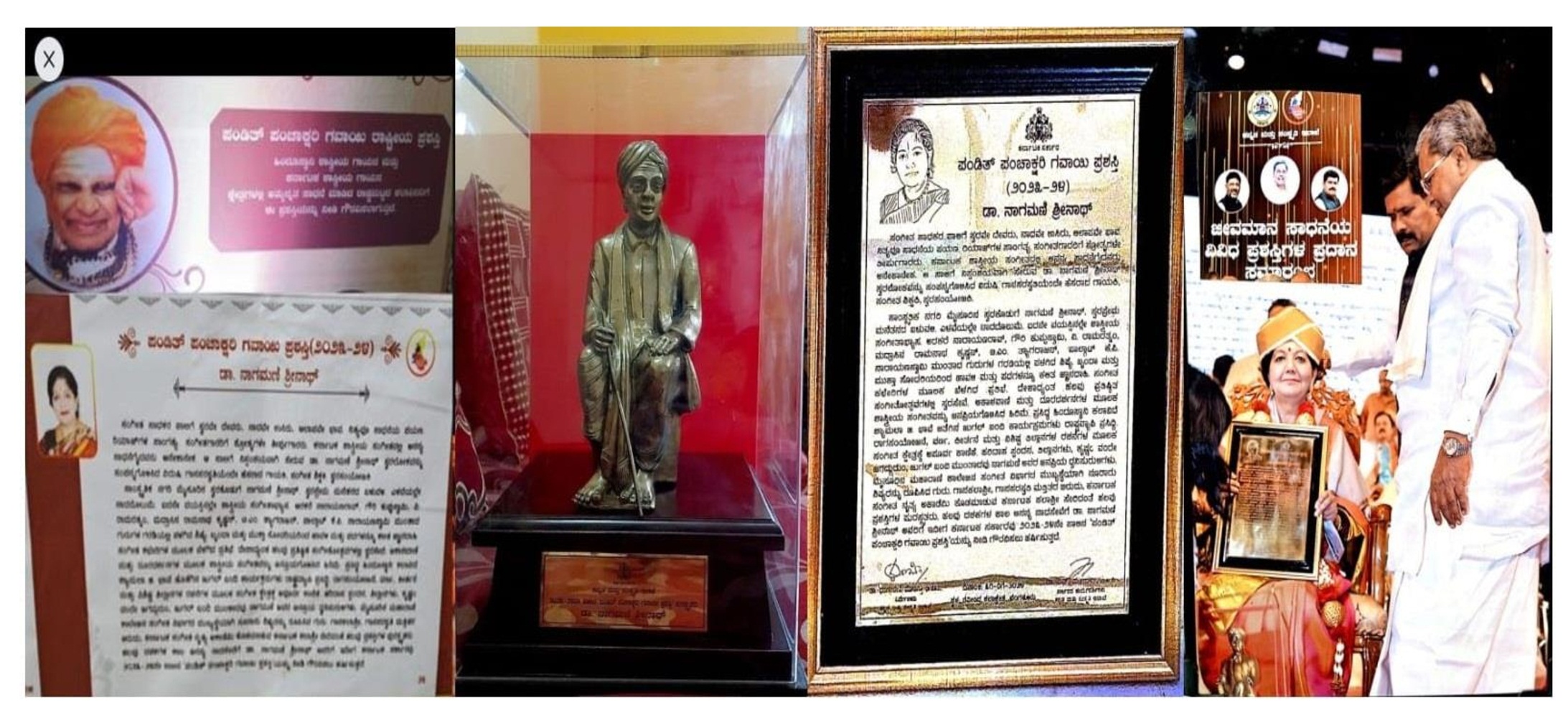
| 2024 | Ganayogi Panchakshari Gawai Rashtreeya Prashasti — National Award for Lifetime Achievement (Highest Award, Government of Karnataka) | Sri Siddaramaiah, Chief Minister of Karnataka |
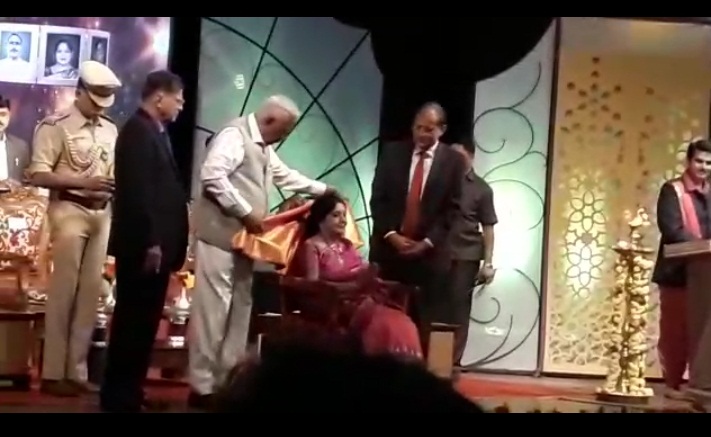
| 2019 | Dooradarshan Chandana Award — Prasar Bharati | Sri Vajubhai Vala, Governor of Karnataka |
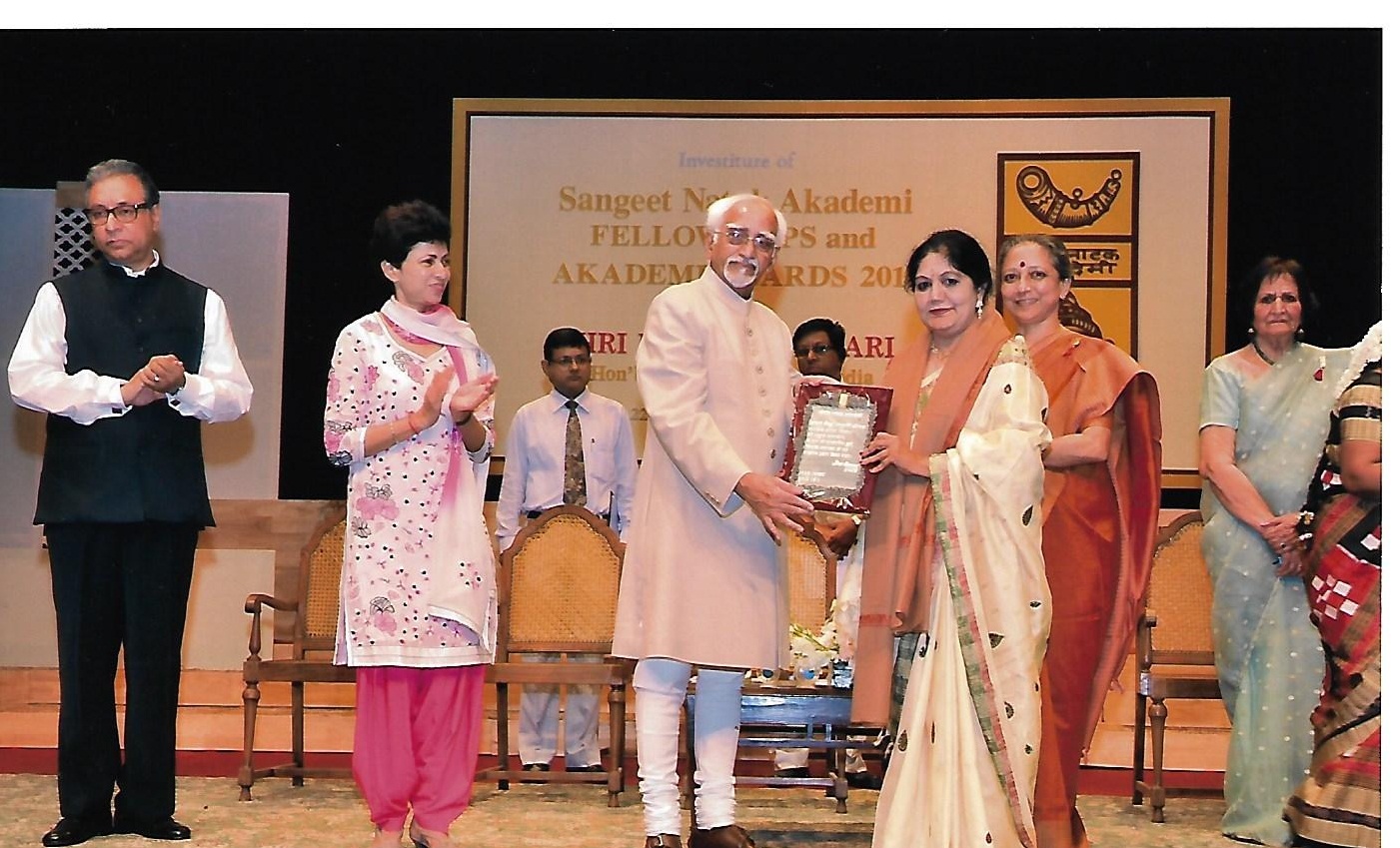
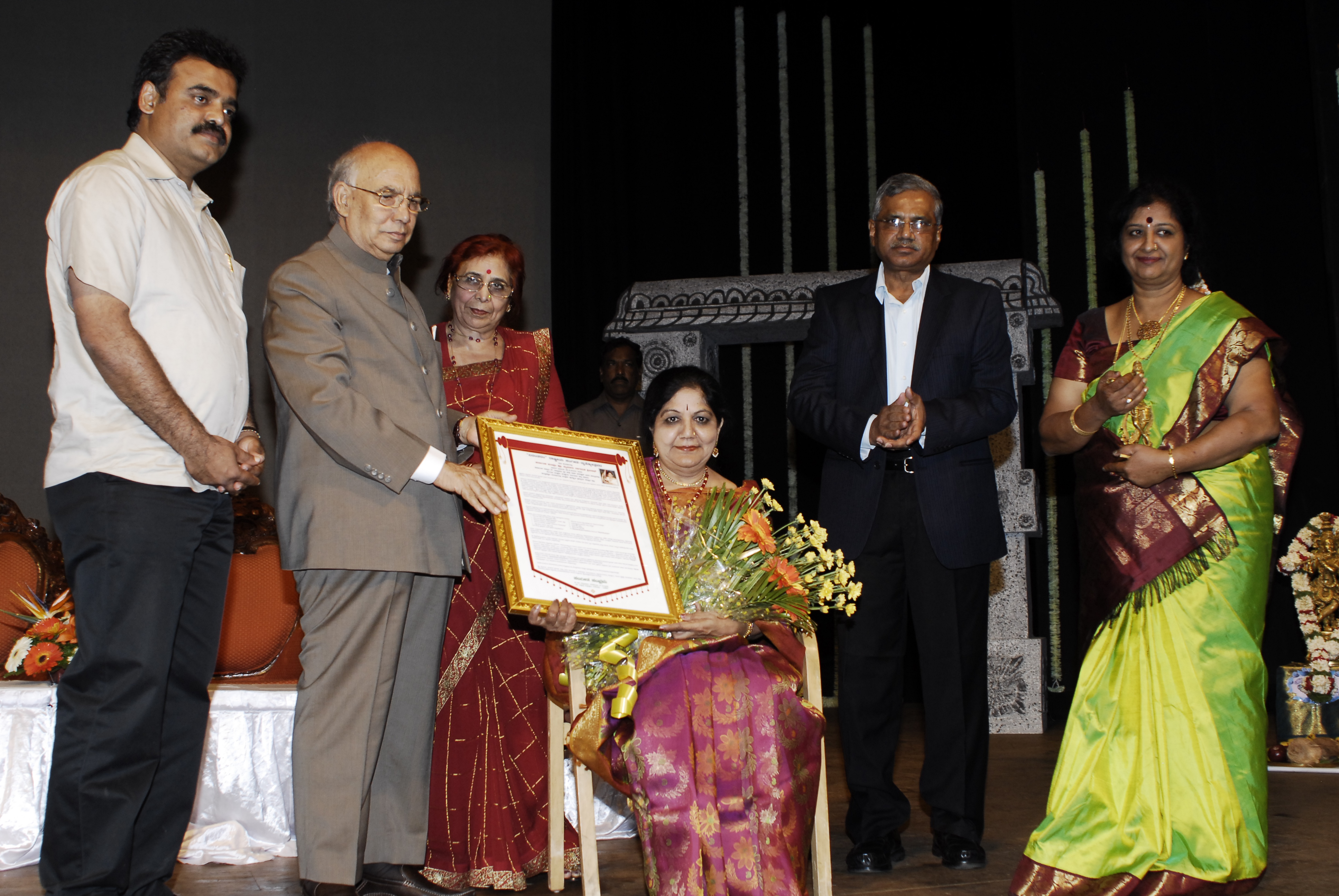
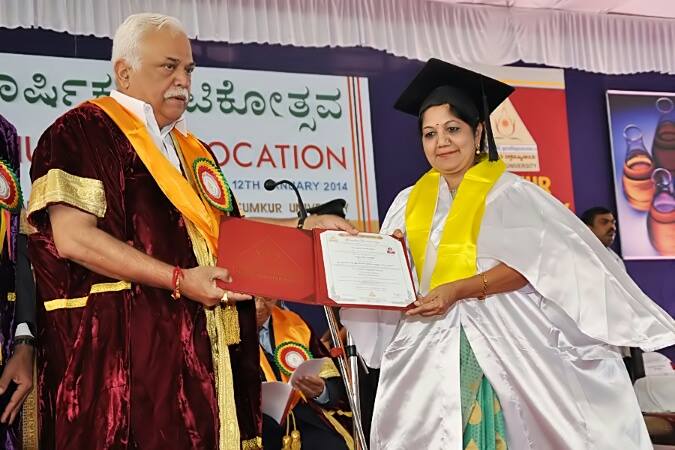
| 2010 | Central Sangeet Natak Akademi Puraskar — Government of India | Sri M. Hameed Ansari, Vice President of India |
| 2003 | Best Teacher Award — Dept. of Collegiate Education | Governor Sri T. N. Chaturvedi & Education Minister Sri G. Parameshwar |
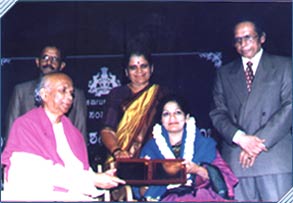
| 1998 | Rajyothsava Prashasthi — Karnataka State Award | Sri J. H. Patel, Chief Minister of Karnataka |
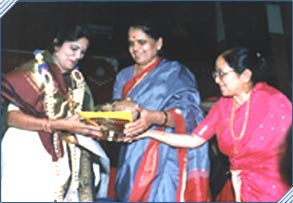
| 1997 | Karnataka Kalasri | Karnataka State Sangeetha Nritya Academy |
| Year | Award | Conferred By |
|---|---|---|
| 2024–25 | Karnataka Kalashree — Best Music Institution (Sunaada Cultural Centre) | Karnataka Sangeetha Nritya Academy |
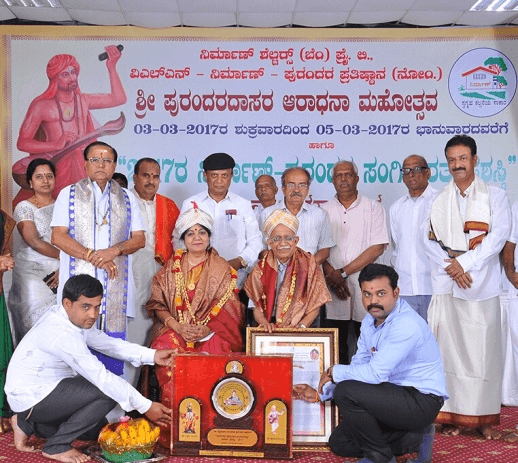
| 2017 | Nirman Purandara Sangeetha Ratna | VLN Nirman Shelters |
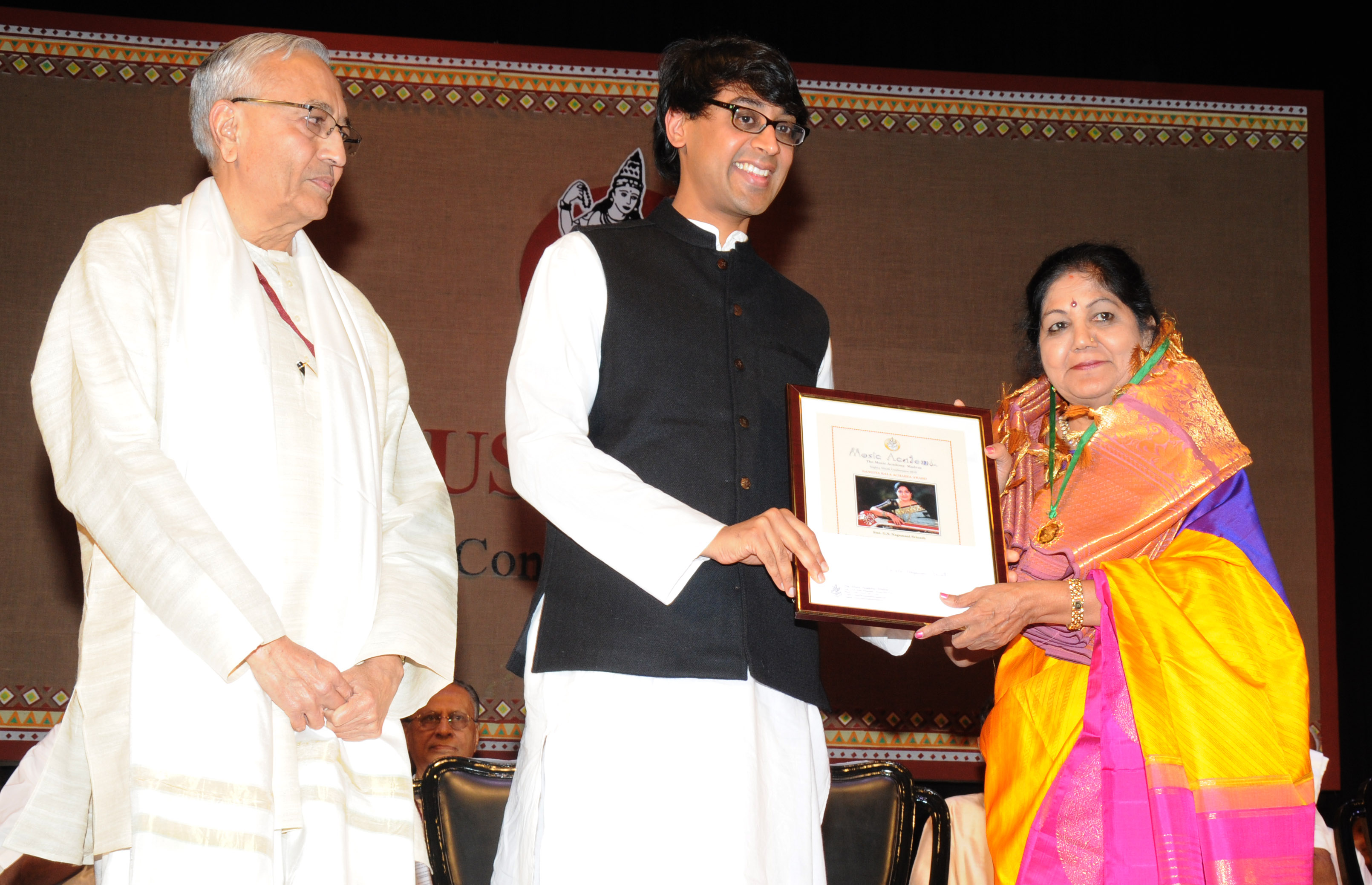
| 2015 | Sangeeta Kalacharya | Madras Music Academy, Chennai |
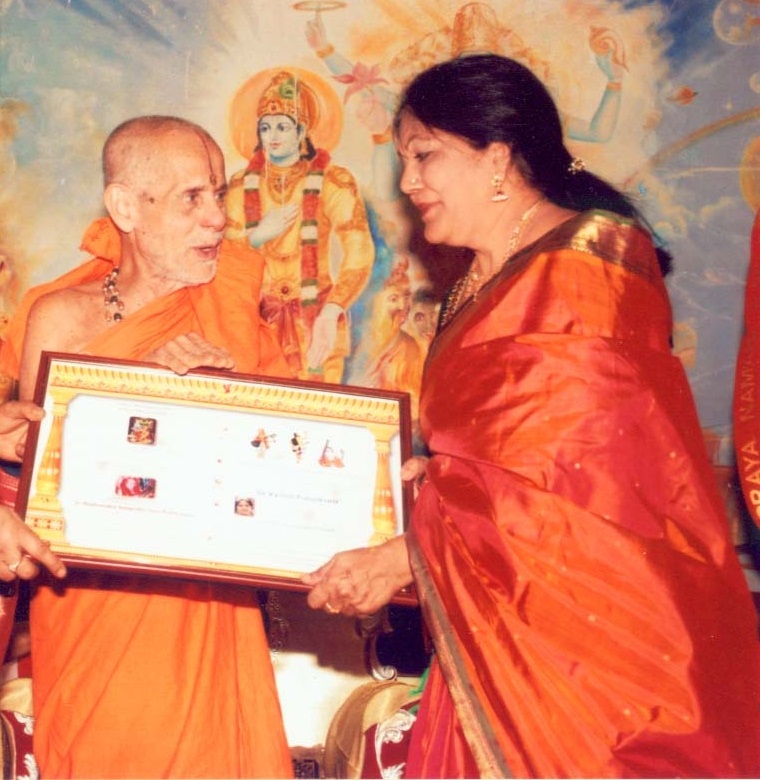
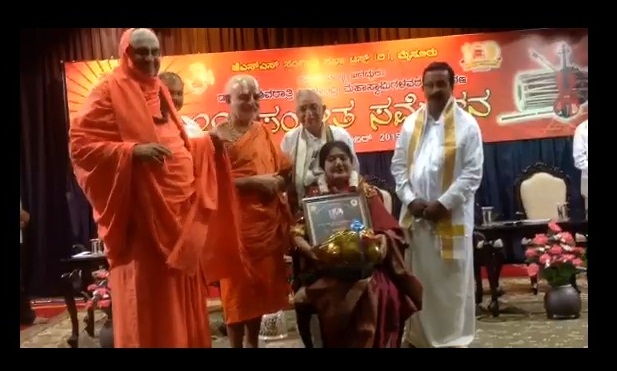
| 2013 | Sri Vyasa Prashasthi | Udupi Pejavar Math — Sri Vishwesha Tirtha Swamiji |
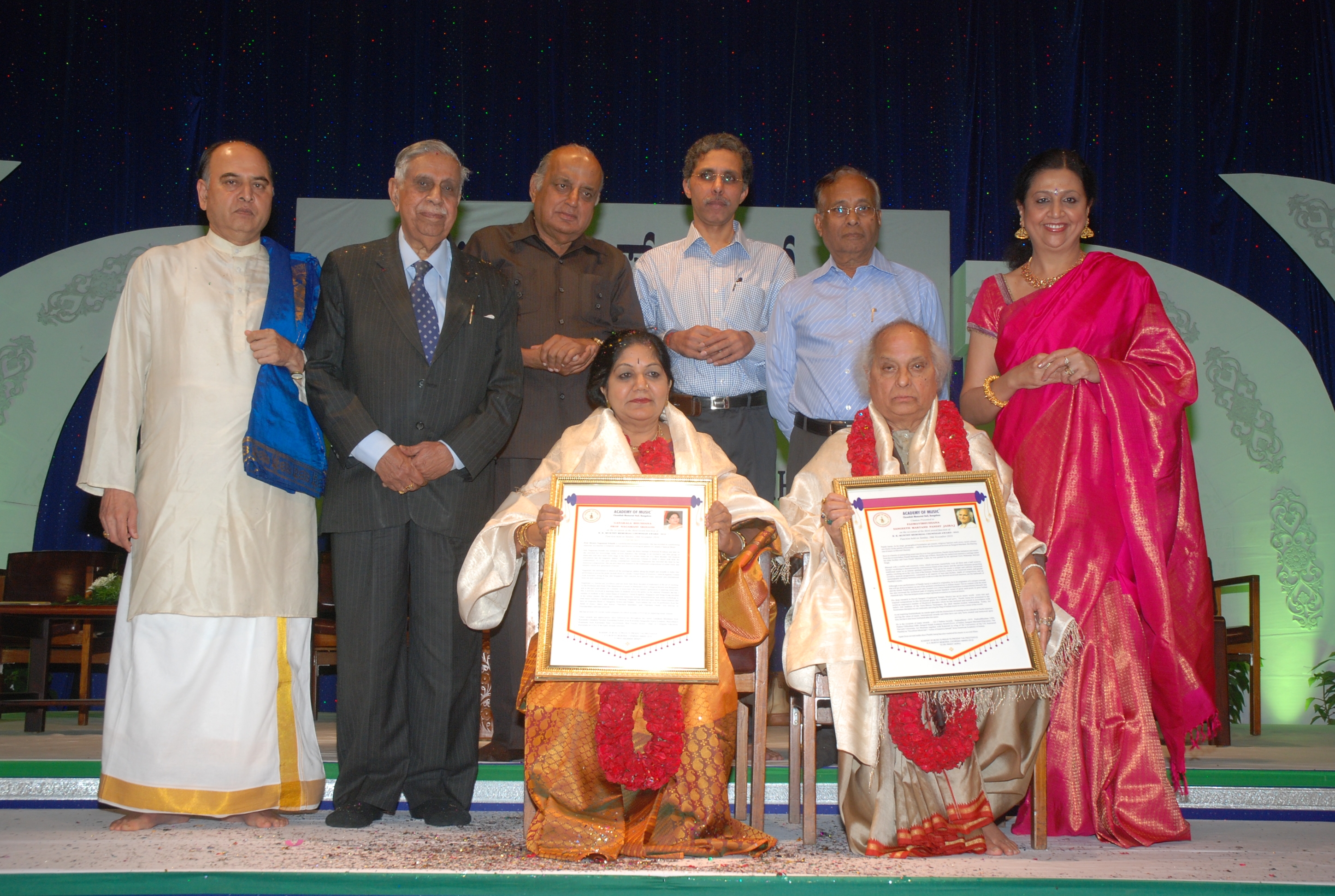
| 2010 | Chowdiah National Award (with Pt. Jasraj) | Academy of Music, Bangalore |
| 2010 | Sambhrama Puraskar | Governor of Karnataka |
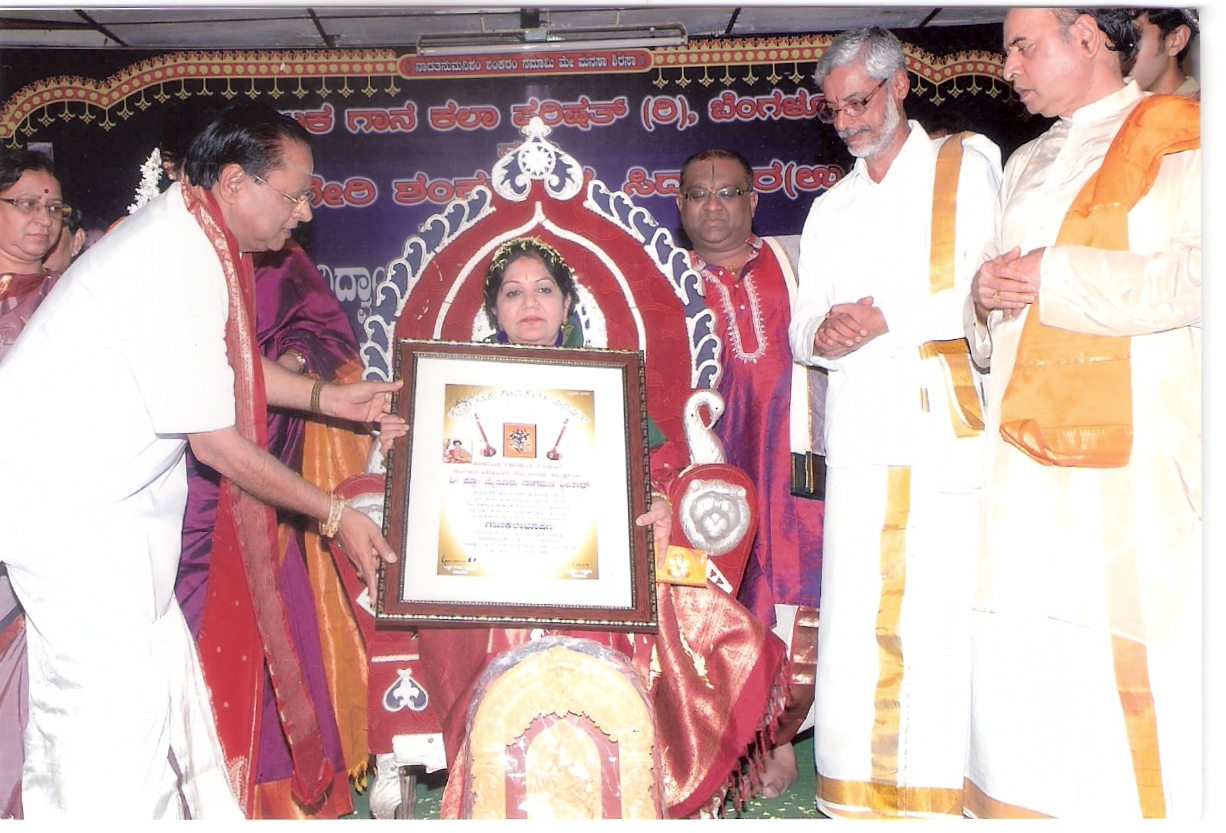
| 2010 | Gaanakalabhooshana | Ganakala Parishath, Karnataka |
Critical Reception
Four decades of independent assessments from India's national publications
"Nagamani sings like a nightingale. What a voice! What a range! What melody! What pliability! She is a grammarian and never deviates from the well-established norms."Indian Express — Subbudu
"Nagamani's music was intoxicating both for its melody and colourful content. Brika and bhava seldom go together but Nagamani proved that she could make an expressive blend of them. A command of laya that gave top class stature to her vidwat."The Hindu — NMN
"Her music is full of fire and brilliance and provided a refreshing experience. Her raga essays appealed by rich melody and traditional format; her neravals and swara manipulations bore testimony to classical acumen."Deccan Herald
"Her immeasurable talents, her discerning bias for sruti, her revealing manodharma, coupled with the essence of orthodoxy, makes her truly a great artiste. Her concert was more or less an uplifting experience."Bangalore Concert Review (Showtime)
"A gem among contemporary musicians. She has not only mesmerised her country with her melodious music but also wielded her music magic across the shores too."Star of Mysore
"What makes Nagamani Srinath a vocalist par excellence is her sruthi, a distortion-free layakari endowed with creative and aesthetic manodharma, and a sharp yet melodious voice."Vijaykumar Patil, Mysore — The Hindu
Contact & Online Presence